
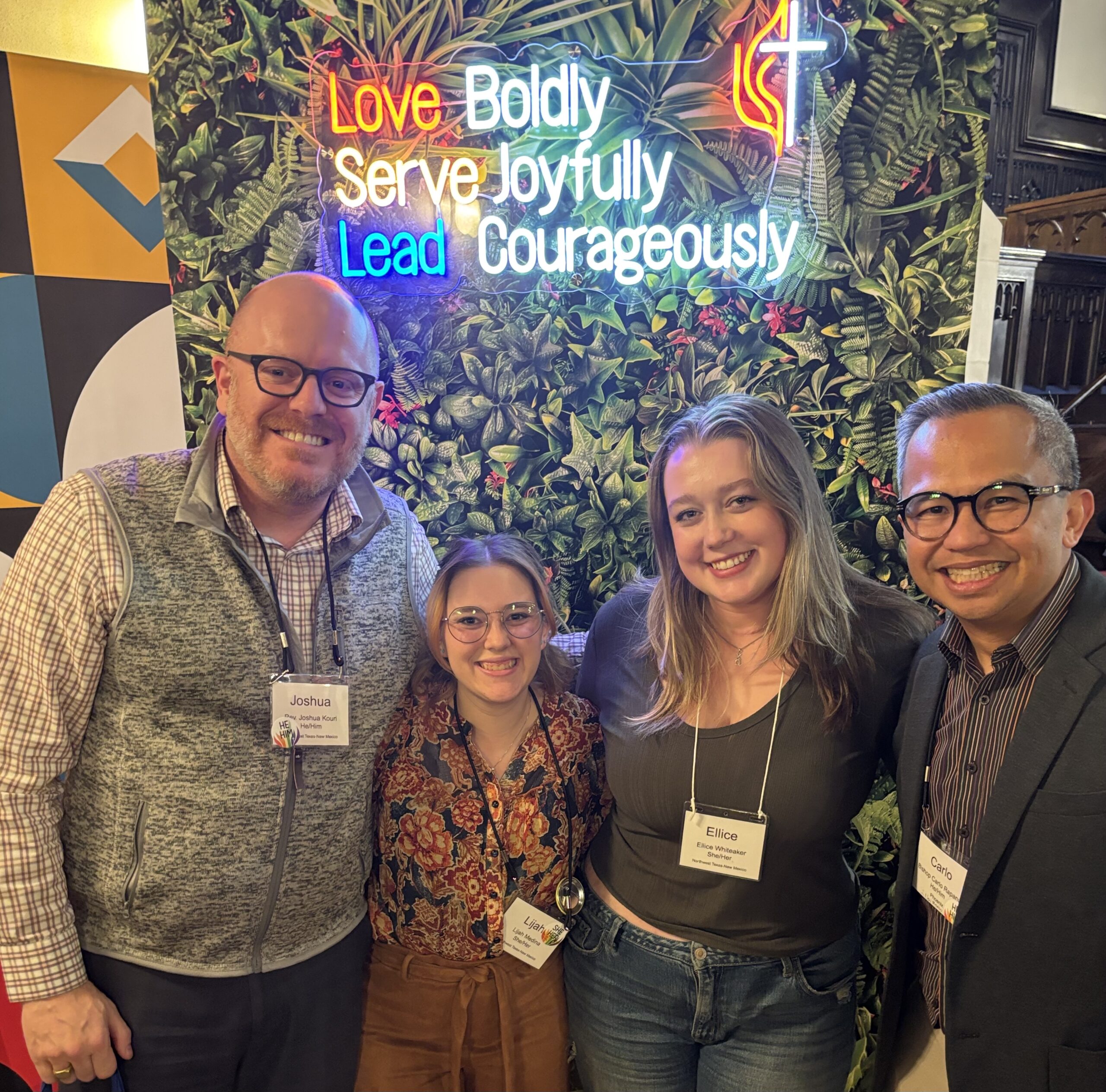
From October 20-24, three delegates from New Mexico had the privilege of traveling to Calgary, Alberta for the UMC Bishops’ Leadership Gathering. I was joined by fellow New Mexicans, Lijah Medina and Ellice Whiteaker and together we carried the perspectives of our conference into discussions with United Methodists from around the world. With four long days of discussion, plenary presentations, and opportunities to envision the future together, I was left with the following impressions.
What I noticed in the room
Perhaps the most striking thing was the posture of our bishops. On the first day, they were challenged to be present for table discussion, offer insights and questions, but to learn alongside everyone else and not dominate discussion This was important given that the gathering skewed younger. Roughly one-third of those gathered were under age 35. What a great opportunity for emerging generations to have the floor! Finally, the conversation was truly a worldwide discussion with representation from Africa, the Philippines, and Europe, along with North America. In short, a great deal of effort was made to bring together leaders as well as emerging voices for an open discussion about the future of our church.
Ideas that emerged:
Currently posted on the Council of Bishops website are 16 ideas that emerged from covenant groups that gathered in Calgary. However, I was more struck by shared themes that emerged from the ideas. These themes give us an idea of where we are being called to be the church in this new era of United Methodism. These themes collectively call for a church that is:
- Less hierarchical, and more networked. A church where life and leadership flows between conferences and congregations, rather than from the top down.
- Centered less on legislation and more on relationships. The gathering calls for a church whose identity is shaped less by General Conference votes and more by how we collaborate, trust, and work to know one another, as well as the world around us.
- Focused on holy collaboration over holy conflict. After years of energy spent on division, the gathering calls for the church to pour that energy into working together for the sake of the gospel.
- Grounded in our Wesleyan practices and heritage. Sometimes newness grows out of reclaiming practices and disciplines that go back to our origins.
- Attentive to urgent challenges. Attendees not just form the United States, but other countries as well, reported the need to name and confront Christian Nationalism, isolation, and tribalization as problems that the church must confront.
These themes give us a vision of a Spirit-led United Methodism that looks to the future, even when change will be difficult.
I am deeply grateful for the opportunity to represent our conference at this first-of-its-kind gathering. Likewise, I look forward to continuing the conversation with you as we discern together what God is calling all of us to pursue in our shared work of ministry.