By Alli Newson
ALBUQUERQUE—July 6, 3026
The vision began with Kathy Jewell, Conference Lay Leader of the New Mexico Conference, who wanted to help more congregations engage the 2020/24 Social Principles as a guide for Christian living in a complex and divided world.
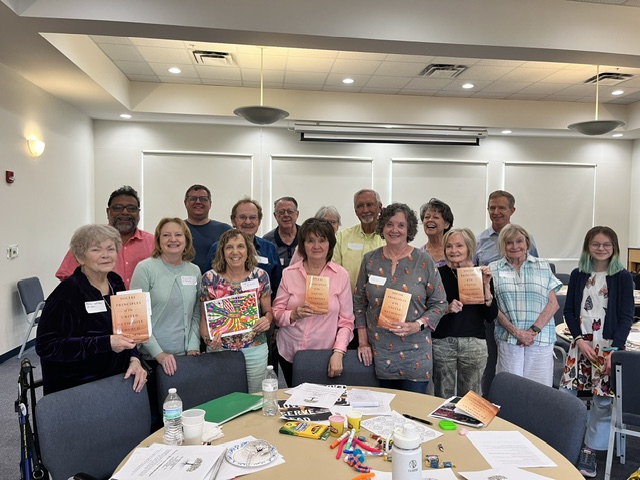
To bring that vision to life, Jewell worked with the Rev. Neal Christie, one of the lead architects in shaping the 2020/2024 Social Principles and the facilitator for each gathering. Together, they spent nine days traveling across the New Mexico Conference, moving from host churches in El Paso to Clovis, Albuquerque, and Santa Fe, introducing United Methodists to the new Social Principles and inviting them into deeper conversation about faith, justice, and the world God loves.
Bishop Carlo Rapanut also reflected on why the Social Principles matter for the life and witness of the church. “They offer a vision for the world rooted in justice and equity,” Bishop Rapanut said. “They lift up the shared commitments that shape our common life, clarify the values we hold, and direct our care for vulnerable people and our endangered planet. At their heart, they represent our faithful effort to join in God’s ongoing work — in our communities and throughout the public sphere.”
For Jewell, the Social Principles remind clergy and laity that it’s all about real relationships. “It comes back to do no harm,” Jewell said. “Scripture and the Social Principles belong together. They grow directly out of Scripture. They are Wesleyan. And they are about winning, not losing. When we are in relationship, the Holy Spirit has room to work.”
Jewell saw that kind of holy conversation unfold across the teaching tour.
“Someone would say something, and another person would respond, ‘I’ve been thinking that, too,’ or ‘That’s my family’s story,’ or ‘I’ve never thought about it that way.’ That’s relationship. That’s growth. That’s discipleship.”
Jewell encouraged laity especially to ask hard questions rather than avoid them. “Jesus asked hard questions,” she said. “He never shied away from them. Why should we shy away from the Social Principles? Why are we afraid of them?”
That question matters because the church’s history with the Social Principles has often been fraught.
Before the revised 2020/2024 Social Principles, the denomination maintained its 50-year stance that the “practice of homosexuality is incompatible with Christian teaching.” That language helped undergird church law prohibiting the ordination of “self-avowed practicing homosexuals” and forbidding United Methodist clergy from officiating at or hosting same-sex weddings.
The revised Social Principles mark a shift in tone, theology, and witness on often contentious issues, including climate change, immigration, abortion, racism, economic justice, human dignity, and the care of creation.
During the gatherings, Christie shared stories from the eight-year revision process and from General Conference including during the General Conference plenary session, where a delegate from Zimbabwe requested the help of the presiding bishop to amend language related to marriage. In her country, where homosexuality is criminalized, she also wanted the church to address the urgent concern of child marriage. Working with the bishop and the legislative process, she brought forward an amendment. The final wording included marriage between a “man and woman” or “two adult persons,” while also emphasizing “consenting age.”
“It was a memorable moment where holy conferencing worked; we oppose child marriage and we affirm two adults right to express mutual love and commitment,” Christie said. “Differences in culture were recognized and honored.”
Christie also invited participants to pay attention to the language of the revised Social Principles. “When the Social Principles say, ‘We joyfully receive, “We believe,’ ‘We confess,’ ‘We affirm,’ and ‘We commit,’ we are saying there is something bigger than us.”
Participants across the conference considered how the Social Principles might shape both local ministry and public advocacy.
Donna Whitson of St. John’s UMC in Santa Fe emphasized the responsibility United Methodists have to use their voices. “We have a chance to be advocates since we live in the state capital and have easy access to our legislators,” Whitson said. “We have two senators and three representatives we can contact to let them know what we support and what we oppose. We have power to use our voices. We need to take a stand and make our views known to the press and our lawmakers.”
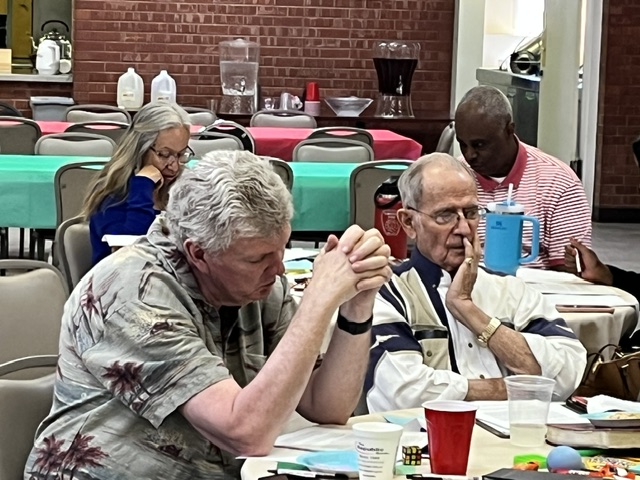
The gatherings also created space for people across theological perspectives to speak honestly and listen carefully.
“As the population becomes increasingly unchurched, it is important to clearly state our foundation and to be able to point to a document that shows we aren’t just making it up,” said the Rev. Stephen White of St. Paul’s UMC in El Paso, Texas. “Conservatives and liberals felt safe talking about controversial things. We agreed on more than our assumptions would have led us to believe. People came and found other people, not cardboard cutouts, and left with some sense of community.”
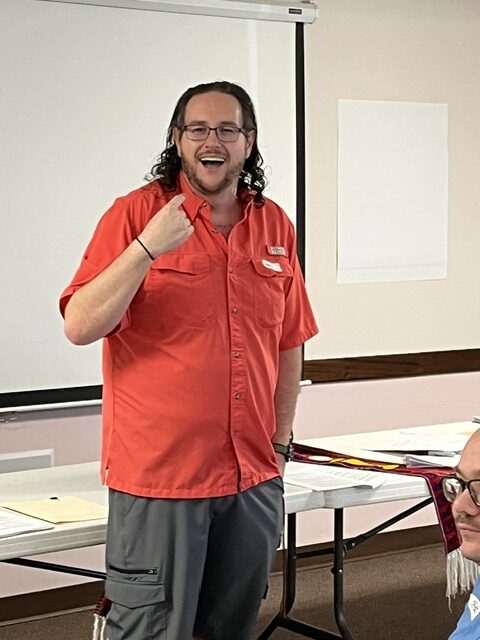
One of the central challenges now is how to apply the revised Social Principles both locally and globally.
The Rev. Sean Smith, pastor of White Rock UMC near Los Alamos, reflected on the global discernment behind the document and the realities facing New Mexico communities. “I stand in awe of the time and effort put into discernment by United Methodists in vastly different contexts — from the Philippines, Europe, Africa, and the United States,” Smith said. “In New Mexico, access to housing and health care, nuclear arms, and affluence created by Department of Energy research and petrochemicals exist side by side with poverty.”
Jewell is especially passionate about how the Social Principles can help the church live faithfully in relationship with Native American United Methodists across the conference and jurisdiction. “Our Native American brothers and sisters don’t have to lose their identity or their culture in order to belong,” Jewell said. “Our Navajo and Apache communities have experienced terrible things over hundreds of years. Children were taken to boarding schools. People were forced to abandon their culture. It was ugly. What I want our Native American brothers and sisters to know is that the Social Principles say they have the same rights, the same dignity, the same opportunities, and the same place in the church that I do.”
“I think sometimes people are afraid that if we start talking about difficult issues, we’ll create conflict,” Jewell said. “What I’ve discovered is the opposite. When people have a safe place to ask questions and to listen to one another, they begin building trust.”
Jewell and Christie are now exploring a second Social Principles teaching tour for the fall to engage more laity and clergy across the conference. The work, they said, is not only about studying a church document. It is about United Methodists listening more deeply, speaking more faithfully, and living more fully into their calling as disciples of Jesus Christ for the transformation of the world.